
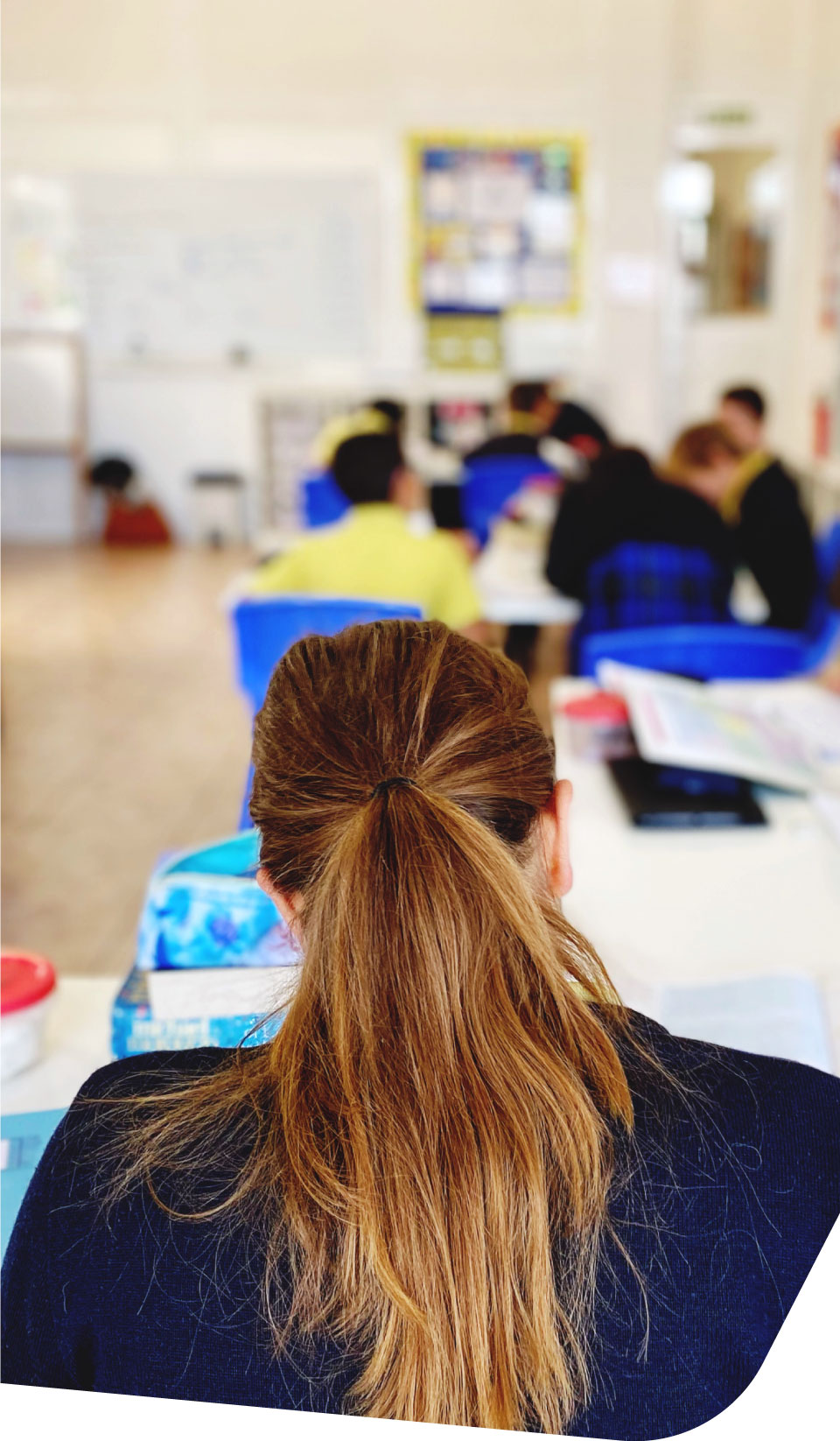
Classes at Saint Andrew’s School

Early Years Foundation Stage (EYFS)
The Early Years Foundation Stage (EYFS) supports children’s learning and development up to five years old. Saint Andrew’s School provides a warm, safe and stimulating environment where children learn through play, exploration and positive relationships. Learning is planned across seven areas: Communication and Language, Physical Development, Personal, Social and Emotional Development, Literacy, Mathematics, Understanding the World, and Expressive Arts and Design. We recognise every child as unique and work closely with families to ensure children feel secure, confident and ready for the next stage of their learning journey.

Key Stage 1 (KS1)
Key Stage 1 includes Year 1 and Year 2, building on the foundations established in the Early Years. Children at Saint Andrew’s School are supported to develop confidence, independence and enthusiasm for learning within an engaging and supportive environment. A strong focus is placed on reading, writing and mathematics, alongside a broad curriculum including science, history, geography, art, music and physical education. Through varied learning experiences, pupils are encouraged to be curious, ask questions and develop positive attitudes to learning.

Lower Key Stage 2 (LKS2)
Lower Key Stage 2, covering Year 3 and Year 4, helps pupils deepen their understanding and develop greater independence. Learning at Saint Andrew’s School continues to strengthen key skills in reading, writing and mathematical reasoning, while pupils access a wide range of subjects including science, history, geography, art, music, computing and physical education. Carefully planned lessons support children in becoming confident learners who take increasing responsibility for their progress.

Upper Key Stage 2 (UKS2)
Upper Key Stage 2 includes Year 5 and Year 6 and prepares the pupils of Saint Andrew’s for the transition to secondary school. Learning builds on previous knowledge, with an increased emphasis on reading comprehension, extended writing and problem-solving in mathematics. Pupils continue to study a broad curriculum, developing both academic skills and personal qualities such as resilience, independence and responsibility. By the end of UKS2, children are well equipped for the challenges and opportunities of the next stage of their education.